


'Happy Gilmore 2': A Hit-or-Miss Sequel Filled with Nostalgia


For someone who has been a star for as long as Adam Sandler has, it’s a little surprising that he has very few sequels on his resume. Out of all the films he has starred in, only three have produced further installments, those being Grown-Ups, Hotel Transylvania, and Murder Mystery. These sequels were borne out of financial success (or high viewership numbers in the case of Murder Mystery), but these tend to feel more like an obligation as opposed to something that their respective filmmakers are passionate about. Other than that, Sandler hasn’t really returned to the well of his most popular work, which is rare in this age of nostalgic sequels to decades-old films. That all changes with the release of Happy Gilmore 2, the sequel to the 1996 hit comedy that helped put The Sandman on the map.
Normally, a project like this would make me groan or roll my eyes, but I couldn’t help but be intrigued. Between Sandler not doing many sequels and my love of the original film, I was cautiously optimistic that the film would at least be a fun time. I couldn’t help but be a little unsure due to the fact that this film is coming nearly 30 years after the original, and that most of Sandler’s recent output hasn’t really hit with me. I also wasn’t entirely sure what this film would be, as I stayed away from the marketing for the most part leading up to its release on Netflix. At best, I expected it to be a sequel that captured at least a fraction of the humor and joy of the first film. At worst, I feared it might be a soulless legacy sequel whose only purpose is to mine nostalgia from the audience. What we end up getting with Happy Gilmore 2 is something in between the two: an amusing, albeit stretched-out, walk down memory lane with a few good laughs, tons of callbacks and cameos, and a mash-up of classic and modern Sandler sensibilities. Not all of it works, but it still offers plenty that fans of the original (and Sandler in general) can appreciate, and has plenty of passion behind it to help pick up some of the slack.
Short tempered hockey player turned professional golfer Happy Gilmore (Adam Sandler) has had a very successful career, going on to win five more championship titles following the events of the first film. After a devastating loss causes him to retire from the sport, Happy falls on hard times. He loses all of his material possessions and becomes an alcoholic, all while struggling to make ends meet. When his only daughter, Vienna (Sunny Sandler) has an opportunity to attend a prestigious ballet school in Paris, he decides to give golf another try in the hopes of raising enough money for her to pursue her dreams of being a dancer. Along the way, Happy runs into some familiar faces, gains new allies and adversaries, and finds himself in the middle of a conflict between traditional golf and a brand new league called Maxi Golf. Through all of this, Happy does everything he can to provide for his daughter, and seeks redemption for himself, both as a man and as a golfer.
The original Happy Gilmore is a succinct, silly studio comedy that largely works because of its leanness and simplicity. Add in that distinct Sandler charm, and you get one of his best films. The same cannot be said for Happy Gilmore 2, as it runs nearly 30 minutes longer than its predecessor and feels it. I can get why Sandler and the film’s co-writer Tim Herlihy might feel the need to make something more expansive, as the film is coming 29 years after the first one and they probably had a lot of ideas they wanted to include. Plus, they probably felt a lot of pressure from fans to make a good sequel, and they wanted to try and leave no stone unturned. The issue with this is that they throw a lot at the wall here and not all of it sticks.
I do appreciate that the film raises the stakes by having the Happy Gilmore character begin the film at rock bottom. It helps keep it from feeling like a total rehash and adds a melancholic edge to it that I found interesting. The core plot of the film is still very similar to the original, as both are about Happy trying to raise money for a family member through golfing. But while the first film mainly sticks to that idea, the sequel adds in a lot of extra business. Again, I get why this is, but it doesn’t feel wholly necessary. I think the throughline of Happy’s alcoholism and grief works for the most part, as it gives the film a tiny bit of dramatic weight and allows Sandler to be in a slightly more grounded mode. We do get some of his classic yelling, but I like that there is a bit of pain within him as well. There are some things that stem from this plot point that don’t work though, such as a gag involving Happy hiding booze in various objects that quickly gets run into the ground and then some. There’s also the branching plotline involving the return of Ben Stiller’s Hal L. character who has reinvented himself as a self-help guru who specializes in helping alcoholics by having them do his household chores. This section of the film had potential, but it just wasn’t all that funny and felt like a waste of Stiller. I think the idea of Happy essentially starting over at the beginning of this film gives it some dramatic weight, but what it ends up yielding is more of a mixed bag.
The film has a bit of that same reverence that many legacy sequels have, but it doesn’t take itself too seriously. It remembers that it needs to be a comedy first and foremost, and it succeeds on this front. Sure, not every joke lands, but I’d be lying if I said I didn’t laugh out loud several times during the film. It does rely quite a bit on nostalgia, though, with a number of callbacks to the first film throughout. It spreads them out enough to where I wasn’t too annoyed by them, but I did think that it does use archive footage from the original maybe one too many times. I did like what they did with most of the characters and details that carry over from the first one, even if some of them are absolutely ridiculous.
As for the new stuff that this film brings to the table, I wasn’t as on board with it. Specifically, the Maxi Golf storyline feels a little tacked on, and leads to the third act dragging on for much longer than it needed to. It also has a hard time bridging the magic of the original with modern-era Sandler, although it does reach a decent balance as the film goes on. The new characters, on the other hand, are quite good and are some of the funniest things about the film. Ranging from the cartoonish energy drink mogul Frank Manatee, to Happy’s new caddy, Oscar, to John Daly as himself, there are a lot of new faces that leave an impact on the film. Regardless of the old or new, the film does end up feeling like fan service many times, which is kind of effective, but does feel laid on a bit thick in places. It all comes together fine, but it is definitely hit or miss.
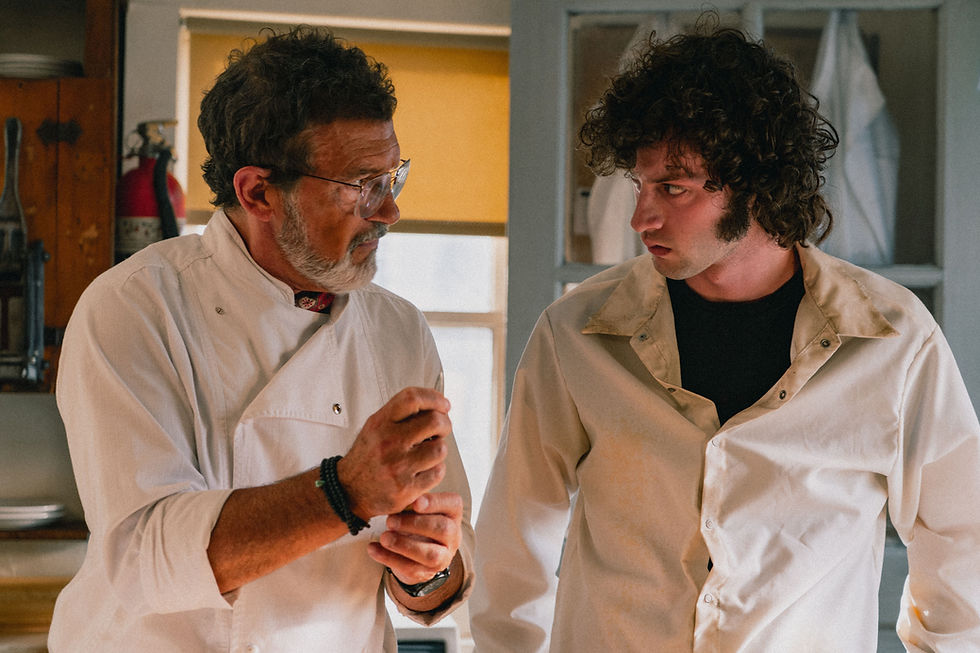
There is no doubt that the cast had a great time making this film, as everyone brings a lot of energy to it. With the lasting cultural legacy that Happy Gilmore has, it’s no surprise that many celebrities were more than eager to be a part of the sequel. The film does feature a lot of cameos, but most of them are pretty well-used. I won’t spoil them here, but I did enjoy quite a few of them. As for the supporting cast, they kind of steal the show. Any Adam Sandler fan knows that his best films typically have a strong group of side characters, and this film certainly has that. I was surprised that Benny Safdie, who previously directed Sandler in Uncut Gems, plays the film’s major antagonist. As Frank Manatee, Safdie is over-the-top in the best way, and a pretty decent villain in the Sandler-verse. The aforementioned John Daly also surprised me, as he is in much more of the film than I was expecting and he is one of the funniest things about it. Daly’s presence alone had me laughing, and the moments that check back in with him are some of the best in the film. The film really knows how to use him, and Daly is more than game for what’s asked of him. Perhaps my favorite performance in the whole film comes from Benito Antonio Martínez Ocasio, a.k.a Bad Bunny. I haven’t listened to too much of his music, but I have really enjoyed seeing his comedic work when he has appeared on Saturday Night Live. He has some great comic timing, and he got some of the biggest laughs from me while watching it. Of course, I must also bring up the great Christopher McDonald, who reprises his role as Happy’s rival, Shooter McGavin. While I have some small issues with Shooter’s storyline, McDonald is ever the professional and still gives his all. He carries a similar energy that he did in the first film, and he is quite funny as well. It’s always great to see him on screen, and it’s fun to see him play Shooter again.
But what about The Sandman himself? Well, he’s in sad sack mode for a good portion of the film, but it makes Happy Gilmore as a character feel more honest. Sandler is a bit muted for much of the film, which lets some of the other characters pop, but leaves him as a little more of a straight man in some scenes. He’s still funny, but we definitely don’t get as much of his short-temperedness that we saw in the first film. This does feel more in line with the version of Sandler that we’ve seen over the past few years, where he’s a little more tamped down but still effective. This gives the impression that Sandler is looking back on his career with fondness and love, but also celebrating where is now and understanding that he is a different person and a different actor now. This seeming self-awareness gives an interesting layer to the film, as well as why he chose now to revisit Happy Gilmore. I wouldn’t say this is Sandler’s finest hour, as he could have put a little more energy into his performance, but he puts in pretty reliable work that will make his fans happy.
Happy Gilmore 2 has some charm and good laughs, but it also overstays its welcome a bit and could have used some tightening up. As someone who grew up watching the first Happy Gilmore repeatedly, I couldn’t help but enjoy some of the callbacks and references, but it does pull from that well a bit too much. I think I would be a bit more harsh towards this film if it weren’t for the fact that it knows exactly what it is. It does rely heavily on nostalgia and fan service while stretching a lot of its plot points and gags thin, but it is also a goofy, somewhat endearing movie that made me laugh and smile for a bit. You can feel the heart that went into making this film, and I can’t be mad at that. It may not be as strong as the original film, but it is an interesting addition to the world of Adam Sandler, and is pretty good for some light entertainment.


Comments